Why is Diheptyl Phthalate Important for Global Suppliers?
In the world of plastics and additives, Diheptyl Phthalate (DHP) stands out. This compound is increasingly crucial for global suppliers, particularly in the manufacturing sector. Experts like Dr. Emma Harrison, a renowned chemist, emphasize its significance. She states, "Diheptyl Phthalate provides essential flexibility and durability in various applications."
DHP plays a vital role in formulation. Companies rely on it for creating products that meet specific performance criteria. For example, DHP enhances the softness of PVC materials, making them more suitable for consumer goods. This versatility makes DHP a strategic choice for suppliers looking to innovate.
However, as the demand for Diheptyl Phthalate grows, suppliers face challenges. These include sourcing sustainable raw materials and navigating regulatory landscapes. Vigilance and adaptability are needed. Just as Dr. Harrison suggests, the industry's future hinges on balancing performance with environmental responsibility.

Importance of Diheptyl Phthalate in Industry Applications
Diheptyl phthalate (DHP) plays a critical role in various industrial applications. Its primary use as a plasticizer enhances the flexibility and durability of materials. According to a report by Grand View Research, the global plasticizer market size was valued at USD 9.99 billion in 2022 and is expected to expand significantly. DHP contributes to this growth, particularly in non-PVC applications where demand for safe and efficient alternatives is rising.
Another notable application of DHP is in the production of adhesives and sealants. The unique chemical structure of DHP allows for strong adhesion while maintaining properties like flexibility and water resistance. A recent study published in the Journal of Applied Polymer Science highlighted that DHP-based adhesives outperform traditional options in both performance and environmental safety. However, the industry faces challenges, including the need for continuous innovation to meet evolving regulatory standards.
Despite its advantages, the use of DHP isn't without concerns. Some manufacturers hesitate due to the complexity of formulation adjustments. There is ongoing research to address the potential environmental impact of DHP and to optimize its applications. This instills a sense of urgency to refine methods while balancing efficiency and safety. As industries search for sustainable solutions, DHP remains an essential component worth exploring further.
Global Demand for Diheptyl Phthalate in Various Industries
Role of Diheptyl Phthalate in Enhancing Product Performance
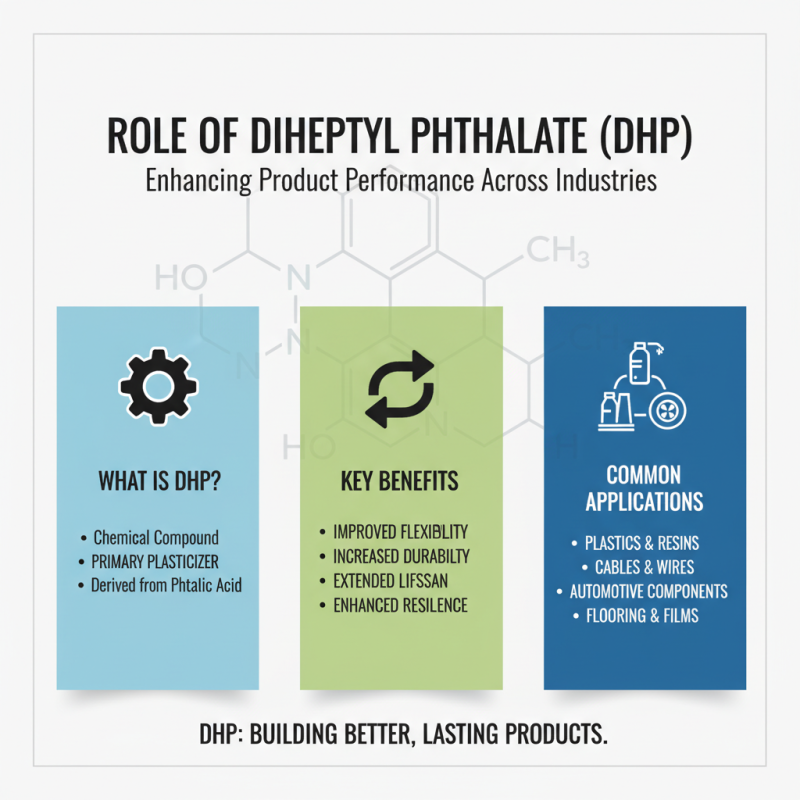
Diheptyl phthalate (DHP) plays a significant role in various industries, particularly in enhancing product performance. This chemical compound acts as a plasticizer, which improves flexibility and durability in products like plastics and resins. In many applications, DHP contributes to a better product lifespan and resilience, essential characteristics for competitive manufacturing.
The versatility of diheptyl phthalate is noteworthy. It is used in coatings, adhesives, and sealants. Each application showcases its ability to withstand harsh conditions and maintain integrity over time. However, there are concerns surrounding its environmental impact and safety, necessitating ongoing research and assessment in product formulations. Suppliers must stay informed about the regulations and best practices to ensure responsible use of DHP.
Enhancing product performance with DHP requires careful consideration of its formulation. Over-application may lead to issues like leaching or adverse reactions with other materials. Therefore, suppliers must balance performance with safety. They should continually evaluate new data regarding DHP's effects on health and the environment. This ongoing evaluation is vital for responsible supply chain management and sustainability efforts.
Global Market Trends Impacting Diheptyl Phthalate Supply
The global demand for Diheptyl Phthalate (DHP) is influenced by various market trends. With an increasing focus on environmental regulations, suppliers are facing challenges. The market for DHP is projected to grow at a compound annual growth rate (CAGR) of 4.2% from 2023 to 2030, according to industry reports. This data highlights the importance of DHP in various applications, particularly in plastics and consumer goods.
Despite the growth potential, the supply chain faces disruptions. Suppliers are navigating geopolitical tensions and logistical hurdles. Increasing raw material costs further complicate procurement. Recent analysis indicates that transportation rates have surged by 15% in the last year. This spike has a direct impact on the availability and pricing of DHP products. As suppliers adjust to these changes, strategic sourcing and innovation become essential.
Sustainability efforts are also reshaping the market landscape. With consumers preferring eco-friendly products, there is a demand for sustainable alternatives to traditional phthalates. Reports show that over 30% of manufacturers are exploring bio-based plasticizers. This trend emphasizes the need for suppliers to remain adaptable. The transition towards environmentally friendly options may create gaps in supply, leading to unpredictable market conditions. Balancing innovation with sustainability will be crucial for future success.
Health and Environmental Regulations Affecting Diheptyl Phthalate Use
Diheptyl phthalate (DHP) is increasingly recognized for its role in various applications. However, health and environmental regulations are reshaping how it is used. Regulatory bodies are focusing on the potential health risks associated with phthalates, including endocrine disruption. This has led to stricter guidelines that suppliers must navigate.
In many regions, there are limits on the concentration of phthalates in consumer products. Manufacturers must ensure compliance with safety standards. This poses challenges for suppliers, who must adapt their practices quickly. The cost of compliance can strain resources, but it also drives innovation in material science.
Additionally, as consumers become more aware of health concerns, they are demanding safer alternatives. Suppliers that proactively address these regulations can enhance their reputation. Yet, balancing compliance and production efficiency remains a complex task. This tension reflects a broader challenge in the industry that merits careful consideration.
Competitive Advantages for Suppliers of Diheptyl Phthalate
Diheptyl phthalate is gaining attention among global suppliers for several notable reasons. This chemical compound serves as a versatile plasticizer, contributing to the flexibility and durability of various products. Suppliers benefit from its growing demand in the plastic manufacturing sector. The compound's ability to enhance product performance sets it apart from traditional alternatives.
One competitive advantage lies in its eco-friendliness compared to other phthalates. Clients increasingly seek sustainable options that meet regulatory standards. Suppliers who prioritize these alternatives may find themselves with a stronger market position. However, maintaining compliance with evolving regulations is a challenge that requires constant vigilance.
Another factor for suppliers is innovation in application. With advancements in technology, diheptyl phthalate can be used in new areas, such as cosmetics and personal care products. Suppliers must continuously adapt to these changes to stay relevant. While opportunities abound, the balance between innovation and regulatory compliance remains delicate. These dynamics require thorough understanding and strategic planning to navigate successfully.